




Hidden Tenda Router Backdoor Gives Hackers Full Administrator Access
 scsecJuly 15, 20261 Mins read145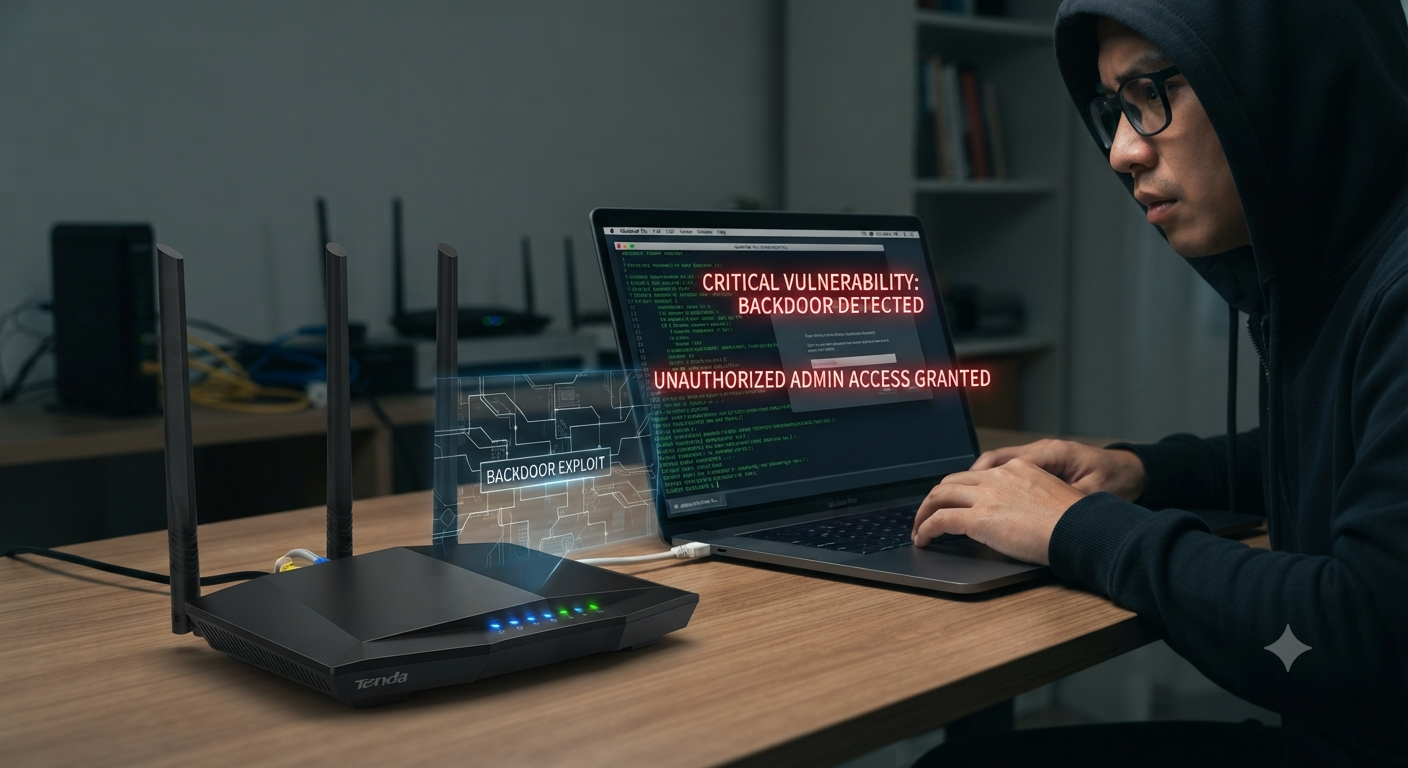
Hidden Backdoor in Tenda Router Firmware Allows Attackers to Gain Admin Access
A hidden authentication backdoor has been discovered in several Tenda router firmware versions, potentially allowing attackers to gain full administrative control of affected devices.
The vulnerability, tracked as CVE-2026-11405, was reported by the CERT Coordination Center (CERT/CC). The issue exists because of an undocumented authentication method inside the router’s web server software. CERT/CC says the vulnerability remains unpatched because Tenda could not be reached for a response.
The flaw is located in the router’s /bin/httpd web server binary and affects the login() function. Normally, the router uses standard MD5-based authentication to verify users. However, if that process fails, the firmware checks a hidden configuration value called sys.rzadmin.password.
If the supplied password matches this hidden value, the router grants administrator-level access regardless of the username entered. This means attackers who know the backdoor password could bypass normal account protections and access the device’s management interface.
With administrative access, attackers could change network settings, disable security protections, modify router configurations, and potentially compromise other devices connected to the same network.
The vulnerability affects several Tenda router models and firmware versions, including:
- Tenda FH1201
- Tenda W15E
- Tenda AC10
- Tenda AC5
- Tenda AC6 V2
CERT/CC says no official security update is currently available. Users are advised to disable remote web management to prevent attackers from accessing the vulnerable interface over the internet.
Security experts also recommend reducing exposure by changing default LAN settings and limiting access to the router’s administrative panel to reduce the risk of automated attacks.
The vulnerability was discovered and reported by an anonymous security researcher.






Related Articles
Tampered Ledger Signers Expose Hardware Wallet Supply-Chain Risks in $86 Million Crypto Heist
Hardware Implant in Ledger Devices Linked to Cryptocurrency Theft Exceeding $86 Million...

French Supermarkets Face Major Food Losses After Hackers Hijack Refrigeration Controllers
Cyberattack Forces French Supermarket Refrigerators to Heat Up to 50°C A cyberattack...

YMCO Network Leader Admits Role in Laundering Millions Through 15,000 Money Mules
Leader of International Money Mule Network Pleads Guilty in Major Cybercrime Laundering...


New P7 DarkSword iPhone Exploit Steals Crypto Data and Expands Remote Access
P7 DarkSword Exploit Kit Targets iPhones With Cryptocurrency Theft and Remote-Control Features...

Leave a comment