




UK to Require ID or Facial Scan for Social Media Accounts Under New Under-16 Ban Plan
 scsecJune 17, 20263 Mins read106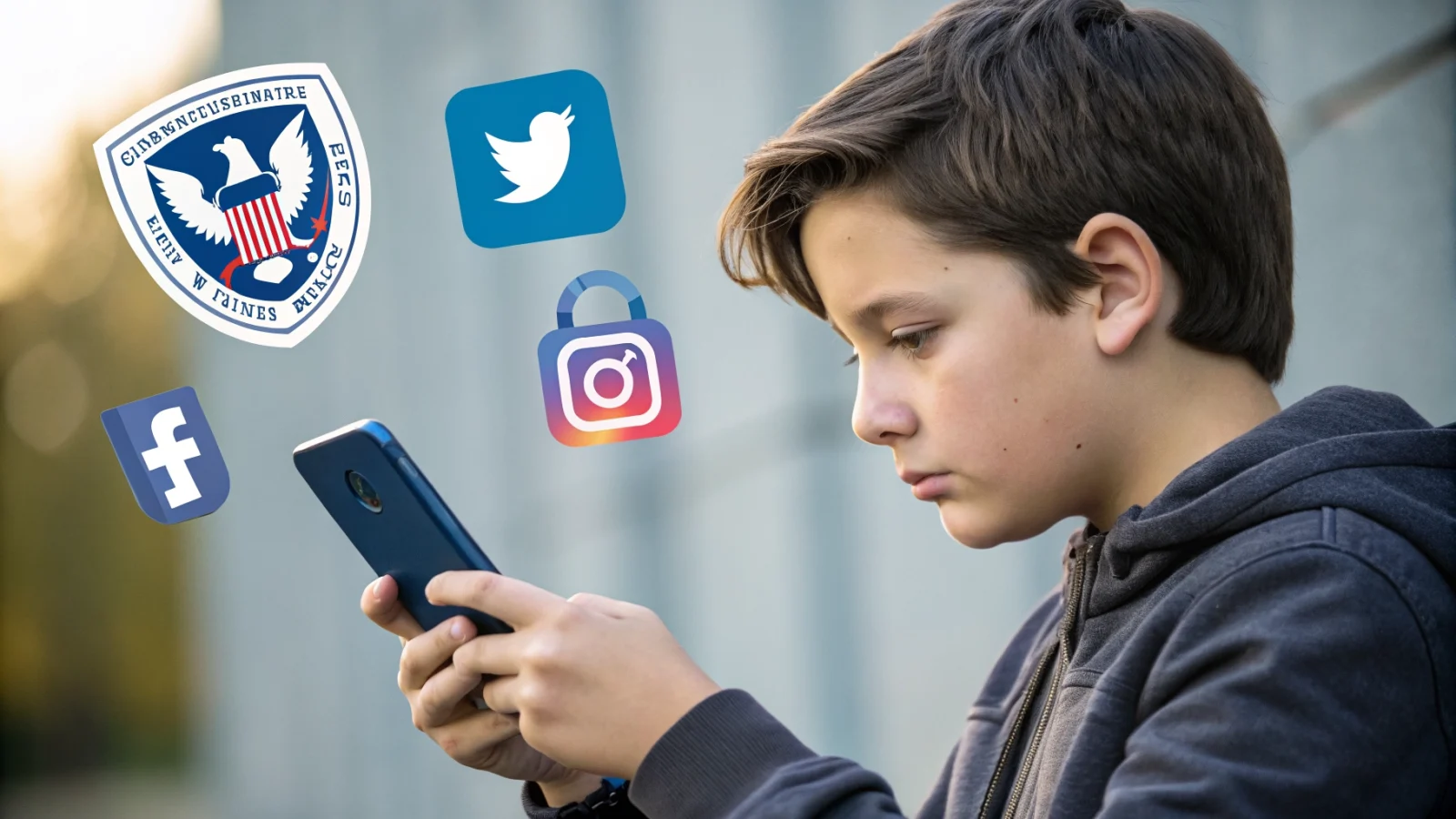
The UK government has announced a major new policy that will ban children under 16 from using social media and introduce strict age verification requirements for anyone creating new accounts online.
Under the plan, expected to be finalized before Christmas and enforced from spring 2027, social media platforms will be required to verify users’ ages. In practice, this means new users will likely need to prove they are over 16 using government-issued ID or facial age estimation scans—similar to systems already used on adult websites under the Online Safety Act.
While existing accounts will largely be exempt, new account creation will no longer allow anonymity without verification. This effectively means most new users in the UK will have to confirm their identity before joining major platforms.
Government Justification
Prime Minister Keir Starmer introduced the policy following a nationwide consultation with over 116,000 responses. The government claims strong public support, stating that the majority of parents and a significant portion of young people support restricting under-16 access to social media.
Officials argue that major tech platforms have failed to protect children, and the new rules aim to restore parental control and improve online safety.
Technology leaders in the government have described the move as a decisive intervention, saying platforms have repeatedly failed to implement effective safeguards for children.
Platforms and Scope of the Ban
The ban targets major social platforms that rely on user interaction and algorithm-driven feeds, including Instagram, TikTok, Snapchat, Facebook, X, and YouTube.
However, messaging apps such as WhatsApp and Signal, as well as YouTube Kids, are excluded. Certain services like education platforms, e-commerce sites, and music streaming services may also be exempt.
Additional restrictions will apply to high-risk features such as livestreaming and direct messaging with strangers, even for users aged 16–17. AI chatbots that simulate romantic or sexual relationships will be restricted to adults only, and broader limits will apply to AI systems interacting with minors.
The government is also considering further rules such as nighttime usage limits and restrictions on infinite scrolling for under-18 users.
How Age Verification Will Work
To enforce the system, platforms will likely rely on:
- Government-issued ID uploads
- Facial age estimation scans
- Existing verified accounts or long-standing account history
Accounts older than many years or linked to verified payment methods may be exempt from re-checks, but new users will be fully subject to verification.
In practice, this creates a system where opening a new social media account will almost always require proving age through sensitive personal data.
Privacy and Security Concerns
Cybersecurity and privacy experts have raised serious concerns about the policy. They warn that large-scale collection of IDs and biometric data increases the risk of identity theft, data breaches, and misuse of personal information.
Experts also argue that many age verification methods can be bypassed, making the system unreliable while still exposing users to privacy risks. Some researchers describe current implementations as “compliance theatre,” suggesting they give the appearance of safety without fully preventing underage access.
There are also concerns about the broader impact on online anonymity, with critics warning that the internet could shift toward requiring identity verification for everyday communication.
VPN Loophole
A major enforcement challenge is the use of VPNs, which can bypass geographic restrictions by routing traffic outside the UK. Similar systems introduced elsewhere have shown that many users, including minors, can still access restricted platforms using VPN services.
The UK government has acknowledged the issue but ruled out a nationwide VPN ban. However, discussions continue around whether children’s VPN use should be restricted, though enforcing such a rule would require additional age checks across VPN services themselves.
Industry and Regulatory Impact
Regulators have already begun enforcing the Online Safety Act against multiple platforms, issuing investigations and fines. The new social media age rules extend this regulatory framework further into everyday internet use.
Technology companies are divided. Some argue that age verification should be handled at the device level rather than by individual platforms, while others warn that strict bans may push teenagers toward less regulated or unsafe online spaces.
Broader Digital Direction
Alongside this policy, the UK is developing digital identity systems such as a government wallet and digital driving licences. These tools are expected to support online age verification in the future.
Together, these developments suggest a shift toward a more identity-verified internet in the UK, where access to social media and online services increasingly depends on proving age through official or biometric methods.






Related Articles

Hackers Steal Data From UK Education Department and Police Database, Exposing 740,000 Records
Hackers Target UK Education Department and Police Database, Exposing More Than 740,000...

22-Year-Old IPMI Flaw Exposes 24,000 Servers to Offline Password Cracking Attacks
22-Year-Old IPMI Security Flaw Exposes Thousands of Servers to Offline Password Cracking...
Gemini Bug Lets Attackers Send Messages From Locked Android Phones Without PIN
Google’s Gemini Bug Lets Attackers Send Messages From Locked Android Phones A...



EU Orders Google to Open Android AI Features to Rival Assistants
EU Orders Google to Open Android AI Features to Rival Assistants The...

Leave a comment