




India’s Telegram Ban Causes UAE Disruptions as Routing Issue Sparks Global Access Problems
 scsecJune 19, 20261 Mins read104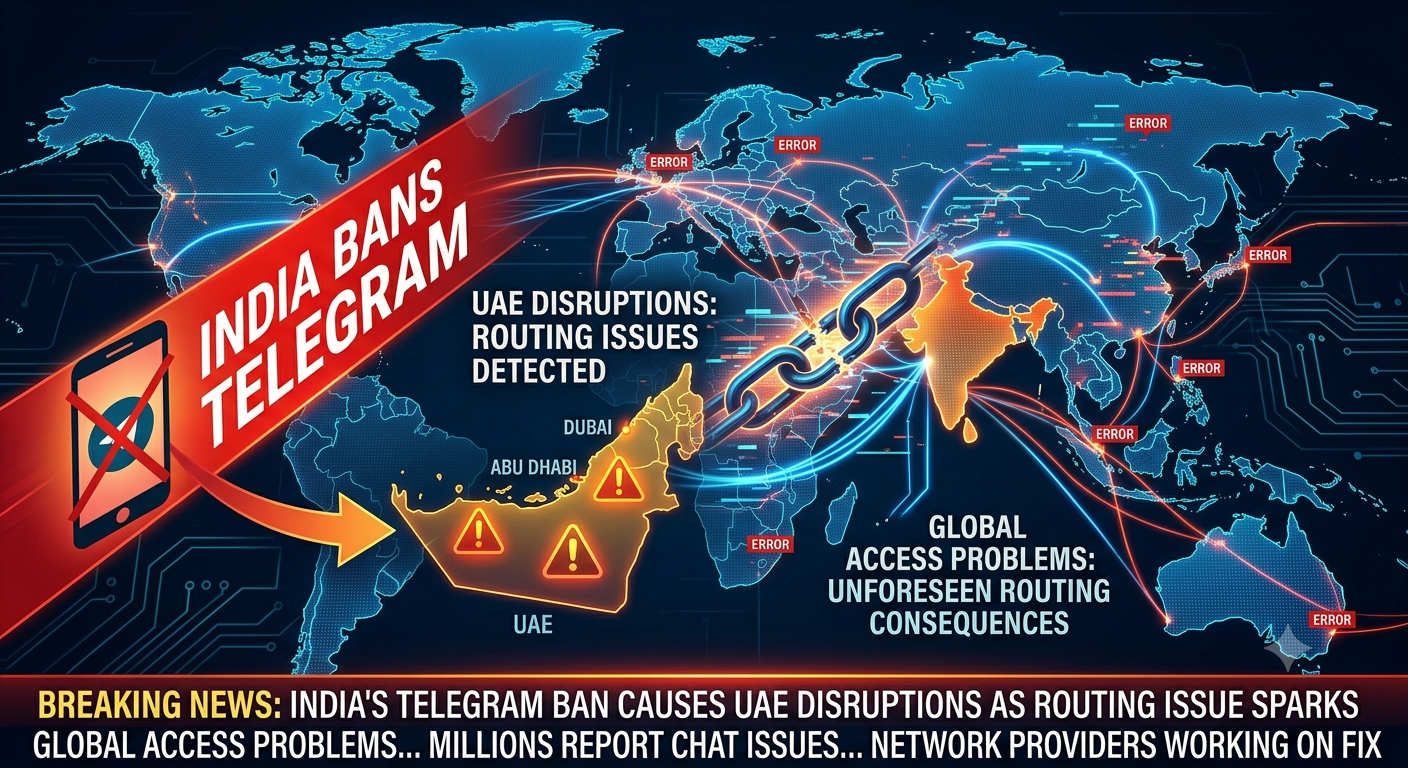
India temporarily restricted Telegram access until June 22 after the platform was allegedly used to circulate and sell leaked exam materials linked to the NEET medical entrance test. Authorities also ordered the app to disable its message-editing feature until June 30 as part of anti-cheating measures.
The restriction, imposed under Section 69A of India’s IT Act, quickly caused unintended effects beyond India. Users in the UAE and other regions reported disruptions, which appeared to stem from internet routing anomalies linked to Indian network infrastructure during the block.
Telegram CEO Pavel Durov claimed that an Indian telecom operator, Reliance, may have been involved in “BGP hijacking” that disrupted access internationally, suggesting possible intentional interference. However, network analysts who reviewed public routing data said the issue was more likely a misconfiguration where domestic blocking spilled into global internet routes.
Experts confirmed that abnormal routing announcements affected Telegram’s IP ranges, but emphasized that there is no verified evidence proving deliberate sabotage. Instead, they described it as a technical leak in internet routing that unintentionally spread beyond India.
India’s National Testing Agency justified the ban by pointing to organized cheating networks on Telegram, which allegedly used channels, bots, and editing tools to distribute exam leaks and manipulate timestamps. Officials said other enforcement attempts had failed before resorting to the nationwide restriction.
Critics, including digital rights groups, argue the response is disproportionate, saying it punishes millions of users rather than targeting those responsible for the fraud. They also point to a lack of transparency in India’s blocking orders, which often do not publicly disclose detailed reasoning.
Telegram has contested the ban in court, arguing it has already removed fraudulent channels and that platform-wide restrictions do not address the root cause of the leaks.
Meanwhile, users affected by the disruption have turned to Telegram’s built-in MTProto proxy system to regain access, which routes traffic through alternative servers to bypass network-level blocks.






Related Articles

Tampered Ledger Signers Expose Hardware Wallet Supply-Chain Risks in $86 Million Crypto Heist
Hardware Implant in Ledger Devices Linked to Cryptocurrency Theft Exceeding $86 Million...

French Supermarkets Face Major Food Losses After Hackers Hijack Refrigeration Controllers
Cyberattack Forces French Supermarket Refrigerators to Heat Up to 50°C A cyberattack...

YMCO Network Leader Admits Role in Laundering Millions Through 15,000 Money Mules
Leader of International Money Mule Network Pleads Guilty in Major Cybercrime Laundering...


New P7 DarkSword iPhone Exploit Steals Crypto Data and Expands Remote Access
P7 DarkSword Exploit Kit Targets iPhones With Cryptocurrency Theft and Remote-Control Features...

Leave a comment