


French Supermarkets Face Major Food Losses After Hackers Hijack Refrigeration Controllers
 scsecOctober 14, 20263 Mins read6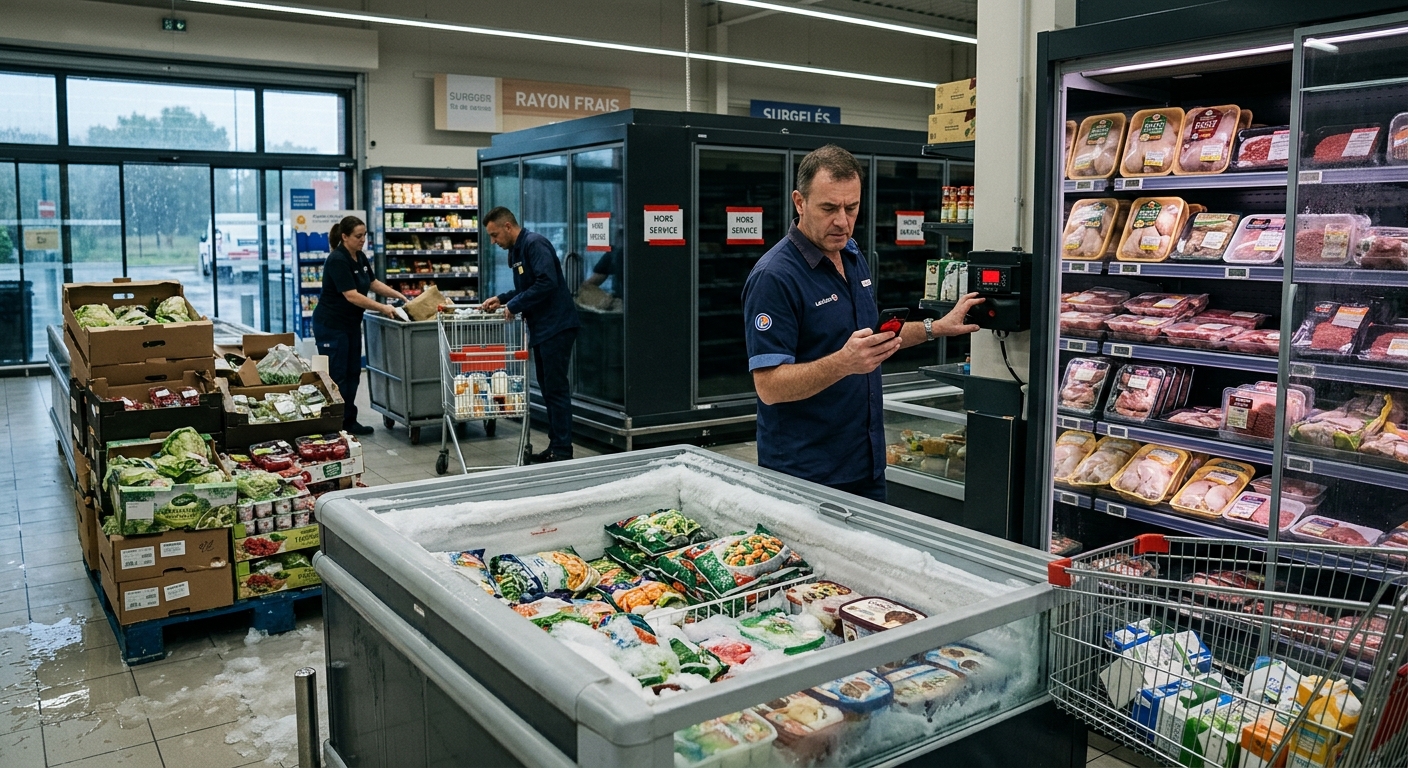
Cyberattack Forces French Supermarket Refrigerators to Heat Up to 50°C
A cyberattack targeting supermarket refrigeration-control systems in France has reportedly caused significant food losses after attackers manipulated equipment responsible for keeping fresh and frozen products cold.
The incident affected refrigeration systems associated with Danish manufacturer Danfoss. Reports indicate that attackers exploited older control software or its defrost functionality, causing some refrigerators and freezers to heat continuously rather than maintain safe storage temperatures.
Temperatures reportedly reached as high as 50°C in affected equipment, forcing stores to discard food that could no longer be considered safe for sale.
The incident demonstrates how cyberattacks against industrial control systems can produce physical consequences, disrupt retail operations, and cause substantial financial losses.
Major French Supermarket Chains Affected
Several French supermarket operators were reportedly affected, including Intermarché, Super U, and E.Leclerc.
Metro stores and smaller independent businesses, including butcher shops, were also reported to have experienced disruption.
French media reports suggested that approximately 150 Intermarché stores may have been affected, although the total number of impacted locations had not been confirmed in the initial reporting.
The attack reportedly began overnight from Sunday into Monday, disrupting systems used to control refrigeration equipment.
Attackers Manipulated Refrigeration Controls
The affected equipment relies on controllers that regulate refrigeration operations across supermarket locations.
Reports indicate that attackers manipulated the defrost functionality in older control software, causing refrigeration equipment to heat rather than preserve low temperatures.
Danfoss was identified as the supplier of the affected control systems. However, the initial reports did not establish the precise technical vulnerability or publicly identify the method used to gain access.
It remained unclear whether the attackers exploited exposed remote-access services, compromised credentials, unpatched vulnerabilities, or another weakness.
The technical cause and the identities of those responsible had not been confirmed in the reporting available at the time.
Food Losses Reach Tens of Thousands of Euros
The consequences were immediate because supermarkets depend on refrigeration to preserve fresh, frozen, and perishable products.
Once temperatures rise beyond safe limits, affected food may need to be discarded to protect consumers.
An Intermarché store in Haguenau, in the Alsace region, reportedly lost frozen-food inventory worth approximately €50,000.
A nearby Super U store reportedly discarded fresh and frozen products, with losses estimated at around €220,000.
These reported figures illustrate the potential financial impact of disrupting refrigeration systems, even without directly stealing data or encrypting corporate files.
The full economic damage across all affected businesses remained uncertain.
Separate Cybersecurity Incident Affects Dutch Retailers
A separate cybersecurity incident also disrupted retail operations in the Netherlands and Belgium.
Ahold Delhaize, the parent company of supermarket and retail brands including Albert Heijn, Etos, and Gall & Gall, reported a cybersecurity incident affecting some of its operations.
The disruptions reportedly began on Sunday afternoon.
However, there was no public evidence establishing a connection between the Dutch and Belgian incident and the French refrigeration attack. The two events should therefore be treated as separate incidents unless further evidence establishes a link.
Government Cybersecurity Authorities Issue Warnings
France’s national computer emergency response team, CERT-FR, reported multiple compromises involving two series of Danfoss refrigeration controllers: the AK-SM and AK-SC.
The agency advised operators to disconnect the affected controllers from the internet or restrict access to them.
The warning underscores the risks associated with exposing industrial control equipment to external networks without adequate security controls.
Remote access can help manufacturers and maintenance providers manage equipment efficiently, but it can also create an entry point for attackers if access is not properly secured.
Lessons for Industrial and Retail Cybersecurity
The incident highlights the need to protect operational technology systems that control physical equipment.
Businesses should review remote-access configurations, remove unnecessary internet exposure, apply security updates where available, and restrict access to authorized personnel.
Organizations should also monitor unusual controller behavior and maintain contingency plans for equipment failures and cyber incidents.
Refrigeration systems may not appear as attractive a target as financial databases or corporate networks, but their disruption can affect public safety, supply chains, and business continuity.
Conclusion
The French supermarket refrigeration attack demonstrates how compromised industrial control systems can create direct physical and financial damage.
By allegedly manipulating refrigeration controls, attackers caused equipment to heat up to reported temperatures of 50°C, forcing affected businesses to discard potentially unsafe food.
The incident reinforces the importance of securing remotely accessible industrial equipment, investigating vulnerabilities promptly, and ensuring that operational technology receives the same cybersecurity attention as conventional IT infrastructure.


Related Articles
Tampered Ledger Signers Expose Hardware Wallet Supply-Chain Risks in $86 Million Crypto Heist
Hardware Implant in Ledger Devices Linked to Cryptocurrency Theft Exceeding $86 Million...
YMCO Network Leader Admits Role in Laundering Millions Through 15,000 Money Mules
Leader of International Money Mule Network Pleads Guilty in Major Cybercrime Laundering...
New P7 DarkSword iPhone Exploit Steals Crypto Data and Expands Remote Access
P7 DarkSword Exploit Kit Targets iPhones With Cryptocurrency Theft and Remote-Control Features...


U.S. Authorities Take Down Flax Typhoon Domains Tied to Global Infrastructure Targeting
FBI Seizes Seven Domains to Disrupt China-Linked Flax Typhoon Cyber Operations The...

Leave a comment