




Tampered Ledger Signers Expose Hardware Wallet Supply-Chain Risks in $86 Million Crypto Heist
 scsecOctober 14, 20264 Mins read4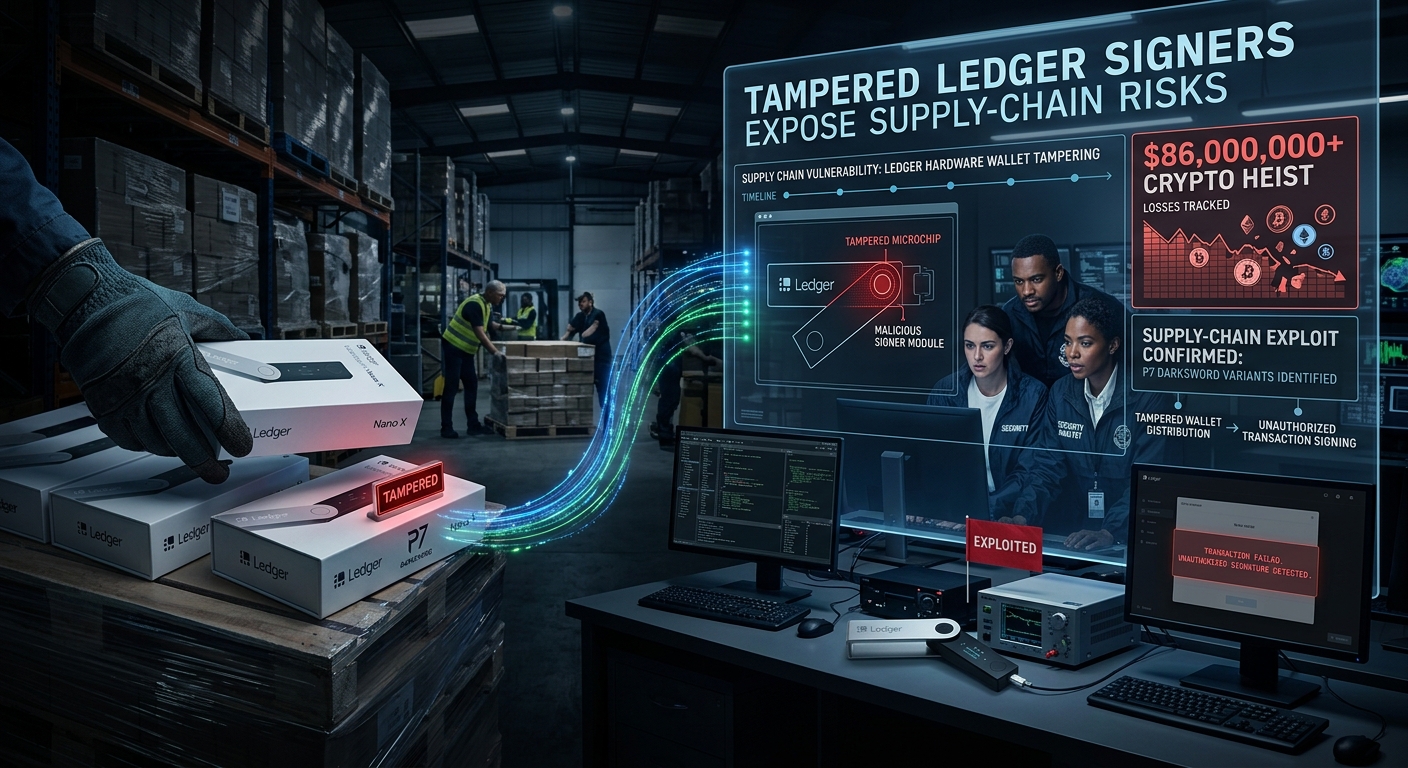
Hardware Implant in Ledger Devices Linked to Cryptocurrency Theft Exceeding $86 Million
A hardware supply-chain attack involving tampered Ledger cryptocurrency signers has been linked to reported cryptocurrency losses exceeding $86 million.
The compromised devices were sold through CryptoBilis, a reseller operating in Southeast Asia. Investigators discovered an unauthorized electronic component hidden inside an affected device, raising concerns that hardware had been modified somewhere along the distribution chain before reaching customers.
The component was designed to capture sensitive information displayed during device setup and transmit it to attackers over a mobile network.
Ledger has confirmed that all fund losses it has verified in connection with the incident involved devices sold through CryptoBilis. However, the company has not confirmed the total number of affected users or the overall amount stolen.
Malicious Electronic Component Found Inside Device
Ledger hardware signers are designed to help users protect cryptocurrency by securely authorizing blockchain transactions using a dedicated physical device.
The compromised signers reportedly contained a small circuit board concealed inside the device enclosure and attached to its existing circuitry.
According to Ledger, the implant could read information displayed on the device screen without modifying the operating system, transaction data, or digital signatures themselves.
The discovery indicates that the devices had been physically altered rather than compromised solely through a conventional software attack.
Investigators suspect that someone in the distribution chain modified the devices by soldering the unauthorized component onto their circuit boards.
The precise identity of the individual or group responsible for installing the implant had not been established in the reported findings.
Recovery Phrases Captured During Setup
The malicious component was designed to identify screens displaying the user’s 24-word recovery phrase during the initial setup process.
A recovery phrase is a critical security credential that can allow someone to restore a cryptocurrency wallet and access the associated assets.
According to Ledger, the implant’s microcontroller decoded the words displayed on the screen and transmitted the captured information through a provisioned electronic SIM, using an LTE connection.
If attackers obtain a valid recovery phrase, they may be able to access the associated cryptocurrency wallet and transfer its funds.
This approach is particularly dangerous because users may believe their recovery information is protected simply because they are entering it through a dedicated hardware device.
More Than $86 Million in Losses Reported
The incident was disclosed on October 9, 2026, after reports emerged that users in Southeast Asia had lost cryptocurrency associated with Ledger devices purchased through CryptoBilis.
Blockchain investigator Specter estimated that the losses connected to the supply-chain attack could exceed $86 million.
That figure represents a reported estimate rather than a total confirmed by Ledger.
On October 13, Ledger reiterated that every confirmed fund loss associated with the incident involved a signer sold through the reseller.
The company has not established the final number of victims or confirmed the full amount stolen, and the investigation remains ongoing.
Ledger Suspends Sales Through Reseller
Following the initial reports, Ledger asked CryptoBilis to stop selling its products while the company investigated the incident.
Ledger also advised customers who had purchased devices through the reseller during the preceding 90 days not to begin setting up devices they had not yet initialized.
Customers who had already configured potentially affected devices were advised to consider moving their assets to another Ledger signer using a newly generated recovery phrase.
The guidance reflects the seriousness of a possible recovery-phrase exposure: once a phrase has been compromised, moving assets to another device without changing the underlying recovery credentials may not provide adequate protection.
Why a Hardware Implant Is Especially Dangerous
Hardware wallets are commonly used to reduce cryptocurrency theft risks by isolating important security operations from ordinary internet-connected computers and smartphones.
However, their security depends on the integrity of the physical device, its manufacturing process, and its distribution chain.
A malicious component installed before a device reaches its owner may be able to capture sensitive information even when the device’s normal software and transaction-signing mechanisms appear to function correctly.
This makes supply-chain attacks particularly difficult for consumers to identify through ordinary use.
The incident also demonstrates that purchasing a device through an unauthorized or compromised distribution channel can introduce risks that are not addressed by routine software updates alone.
Steps Cryptocurrency Users Should Take
Users who purchased Ledger devices through CryptoBilis should follow the manufacturer’s security guidance.
Important precautions include:
- Do not initialize an unused potentially affected device. Avoid entering a recovery phrase into a device suspected of containing unauthorized hardware.
- Move assets to a trusted device. If a device has already been configured and may be compromised, use a trusted replacement to establish a secure destination wallet.
- Generate a new recovery phrase. The destination wallet should use a newly generated phrase rather than reusing potentially exposed credentials.
- Verify the device’s origin. Purchase replacement hardware through a trusted distribution channel and follow the manufacturer’s verification instructions.
- Monitor wallet activity. Review transactions and account activity for unauthorized transfers.
Because the reported implant was physically installed inside the device, a routine firmware update alone should not be assumed to remove it.
Users should consult official manufacturer guidance before attempting recovery or transferring funds.
Conclusion
The reported cryptocurrency theft linked to tampered Ledger signers highlights a serious supply-chain security risk for digital asset holders.
An unauthorized hardware implant allegedly captured recovery phrases during device setup and transmitted them to attackers, potentially enabling the theft of cryptocurrency from affected wallets.
Although the reported losses exceed $86 million, Ledger has not confirmed the final total or the number of impacted users.
The case reinforces a crucial security principle: protecting cryptocurrency requires not only secure software and transaction procedures but also confidence in the integrity of the physical hardware used to safeguard digital assets.




Related Articles

French Supermarkets Face Major Food Losses After Hackers Hijack Refrigeration Controllers
Cyberattack Forces French Supermarket Refrigerators to Heat Up to 50°C A cyberattack...

YMCO Network Leader Admits Role in Laundering Millions Through 15,000 Money Mules
Leader of International Money Mule Network Pleads Guilty in Major Cybercrime Laundering...
New P7 DarkSword iPhone Exploit Steals Crypto Data and Expands Remote Access
P7 DarkSword Exploit Kit Targets iPhones With Cryptocurrency Theft and Remote-Control Features...



U.S. Authorities Take Down Flax Typhoon Domains Tied to Global Infrastructure Targeting
FBI Seizes Seven Domains to Disrupt China-Linked Flax Typhoon Cyber Operations The...

Leave a comment