




Hacker Leaks 281GB of AfD Emails and Internal Documents in Major Data Breach
 scsecOctober 31, 20261 Mins read1
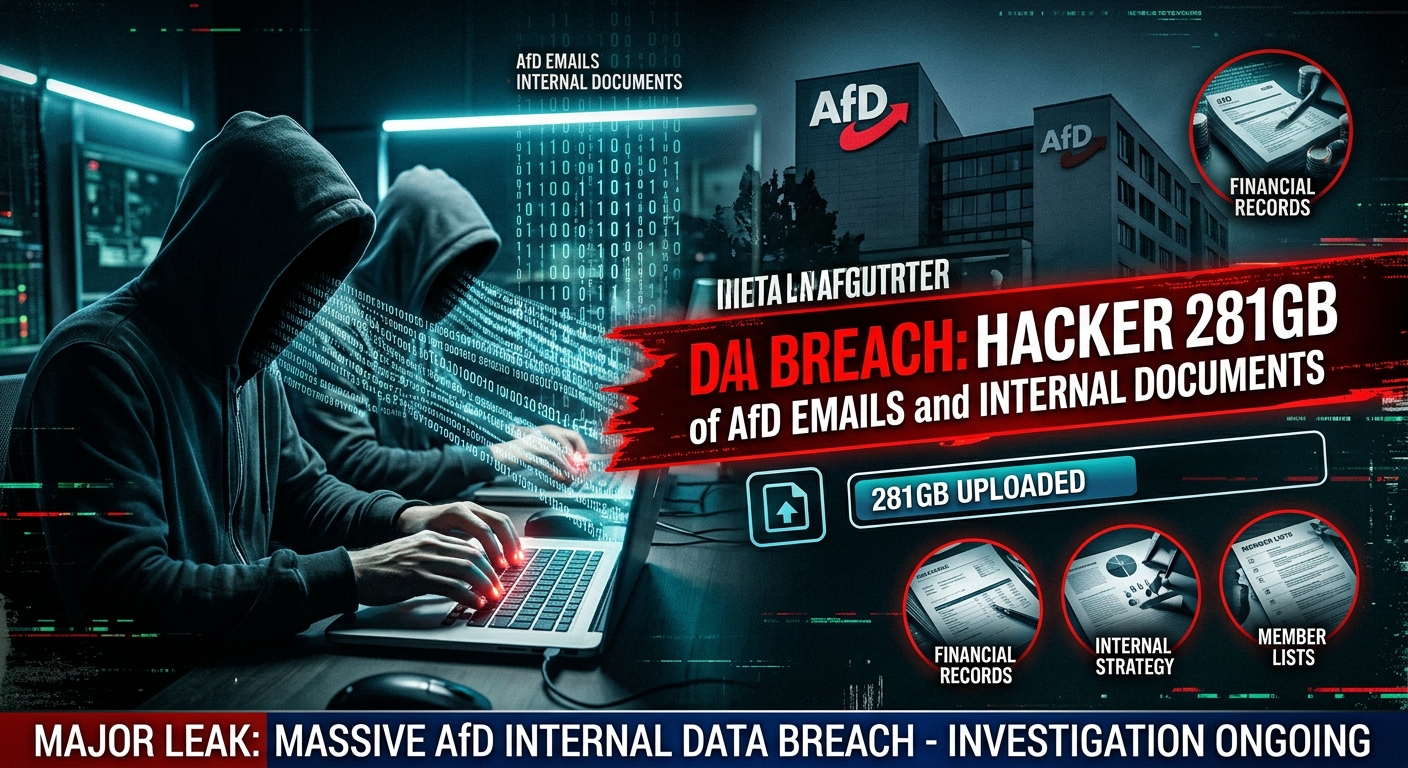
Hacker Leaks 281GB of Internal Emails and Documents From Germany’s AfD Party
Germany’s far-right Alternative for Germany (AfD) political party has confirmed a significant cybersecurity breach after a hacker published a massive collection of internal emails and documents reportedly stolen from its hosting provider.
The leaked archive contains approximately 281GB of data, including an estimated 421,179 internal emails and more than 100,000 additional files.
The political party acknowledged that its hosting provider had been compromised in September 2026, allowing attackers to access and copy information from several email accounts.
Although the AfD claimed that most affected mailboxes had not been actively used for years, reports indicate that the stolen correspondence includes messages dated as recently as September 12, 2026.
The leak gained further attention after a website called Hexane.cc published artificial intelligence-generated summaries of hundreds of thousands of emails. The messages were organized into categories, including racism and antisemitism, and assigned severity ratings ranging from Low to Critical.
Rather than publishing every original email directly, the website provided AI-generated summaries and encouraged visitors to download the complete archive through a torrent file.
However, the accuracy of these summaries has been questioned. Sources associated with the political party reportedly acknowledged that the leaked emails appeared authentic but claimed that several AI-generated summaries contained inaccuracies.
Reports also suggest that the hacker may have gained access through an unpatched website, although this explanation has not been independently verified.
The attacker claimed that the publication was intended to expose alleged hypocrisy within the political organization. The hacker also reportedly claimed that an individual using a Proton Mail address offered €100,000 to remove the leaked material.
The incident comes after another security-related problem in September, when an AfD spokesperson warned that their work email account had been used to distribute phishing messages containing potentially malicious PDF attachments.
Cybersecurity experts warn that downloading leaked archives from unofficial websites and torrent platforms can expose users to malware and additional security threats. Handling stolen personal information may also create legal complications.
The breach highlights the risks associated with neglected websites, outdated infrastructure, and poorly protected email systems. Even inactive email accounts can contain sensitive correspondence that attackers may exploit for fraud, blackmail, or further cyberattacks.






Related Articles
Trezor Warns of Suspected Crypto-Stealing Hardware Implant in Safe 5 Wallets
Trezor Warns of Suspected Cryptocurrency Theft Implant in Safe 5 Hardware Wallets...

FBI Seizes Virtualine Domain Over Alleged Links to Cybercrime Networks
FBI Seizes Virtualine Domain Over Alleged Links to Major Cybercriminal Operations The...
Hackers Target Newly Discovered WordPress Vulnerability in Active Attacks
Hackers Begin Targeting Newly Disclosed WordPress Vulnerability Cybersecurity researchers have reported active...


Polymarket Traders Lose Over $2 Million in Third-Party Supply Chain Attack
Polymarket Traders Lose More Than $2 Million in Third-Party Supply Chain Attack...

Leave a comment