




UK Legal Aid Agency Data Breach Exposes Records Dating Back to 1978
 scsecOctober 19, 20262 Mins read4
UK Legal Aid Agency Data Breach Exposes Records Dating Back to 1978
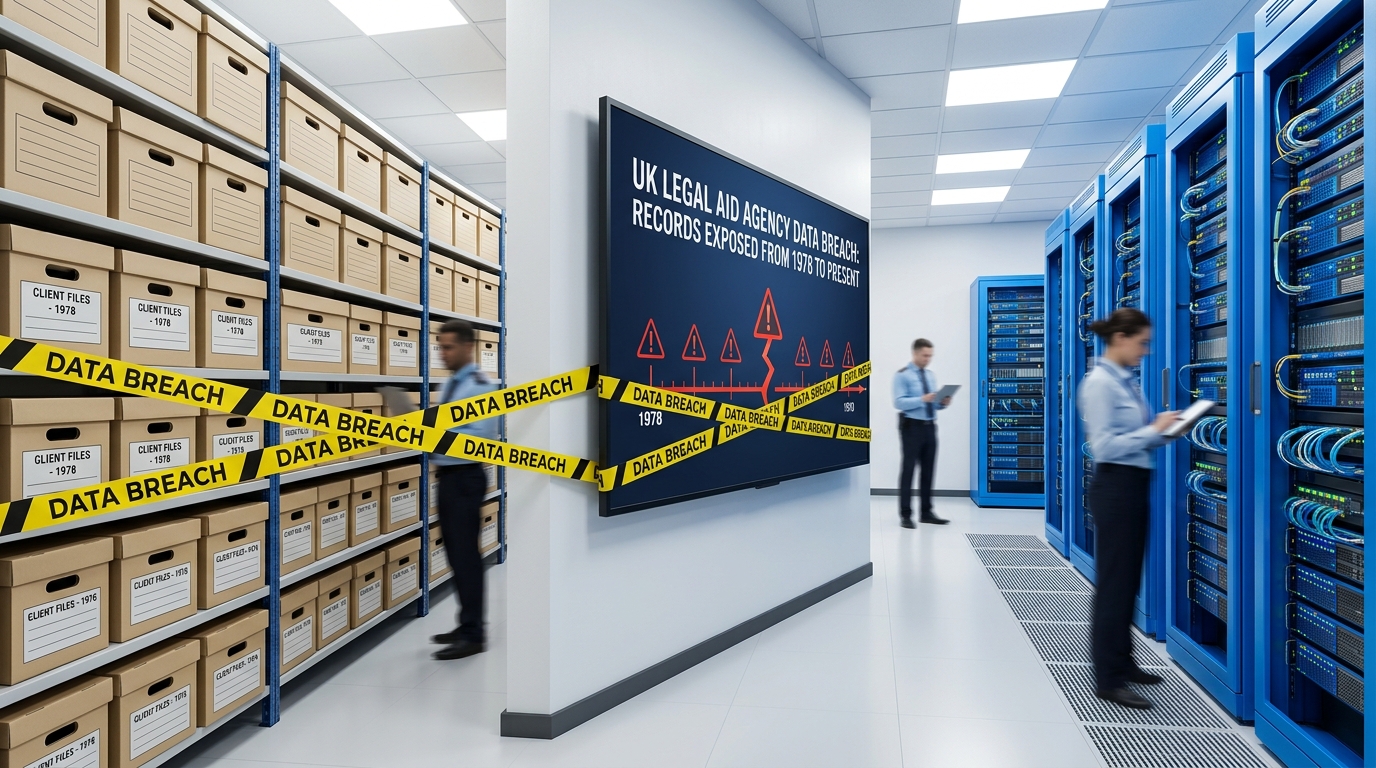
The UK’s Legal Aid Agency has confirmed that hackers who breached its IT systems stole records dating back to 1978, revealing a much broader historical scope than initially understood.
The agency operates under the Ministry of Justice and administers legal aid services in England and Wales. Its responsibilities include supporting eligible individuals and working with thousands of legal service providers.
The cyberattack occurred in April 2025 and was publicly disclosed in May that year. Subsequent investigations revealed that attackers had stolen sensitive personal, financial, and administrative information.
Investigation Uncovers Decades of Records
In an update published in October 2026, the Legal Aid Agency confirmed that approximately 250,000 stolen records predated 2007.
Most of those records came from the 1990s and 2000s, while a much smaller number dated to before 1990. The earliest record verified by the agency was from 1978.
The agency clarified that the discovery of historical records does not mean every individual who applied for legal aid or interacted with the justice system before 2007 was affected.
Most of the compromised information related to applications, claims, or payments submitted between January 2007 and May 16, 2025, or to cases that remained active during that period.
Sensitive Personal and Financial Information Stolen
The breach exposed information associated with legal aid applicants and recipients, including records containing personal and financial details.
The compromised data included names, contact information, dates of birth, national identification numbers, criminal history information, and employment details.
Financial information relating to contributions, debts, and payments was also affected.
The attackers additionally stole information concerning legal aid providers, including contracts, office locations, financial records, and contact details.
Credentials associated with the LAA Online Portal, including names and email addresses, were also among the compromised information.
Such data can be valuable to criminals seeking to conduct identity fraud, impersonation, or targeted phishing attacks.
The Breach Was More Serious Than Initially Reported
When the agency first disclosed the incident in May 2025, it warned that financial information belonging to legal aid providers might have been compromised.
Further investigation revealed a more extensive breach involving sensitive information about applicants, recipients, and legal service providers.
The later discovery of records dating back nearly five decades demonstrated the difficulty of determining the full impact of a cyberattack when affected systems contain extensive historical archives.
The Ministry of Justice has continued to provide updates as investigators develop a clearer understanding of the incident.
Government Announces Additional Cybersecurity Investment
The Ministry of Justice said it had committed £20 million to stabilizing and upgrading the Legal Aid Agency’s digital systems before the attack.
Following the incident, the government announced investment exceeding £200 million to modernize digital services, improve resilience, and strengthen cybersecurity across legal aid services.
The government also stated that there was no evidence that the personal information believed to have been stolen had been published.
However, the absence of publicly available data does not eliminate the possibility of private misuse or future disclosure.
Lessons for Public-Sector Cybersecurity
The incident highlights the risks associated with government systems that retain sensitive information for many decades.
Historical records may remain valuable for administrative and legal purposes, but organizations must ensure that older information is adequately protected and cannot be accessed through compromised systems.
Effective safeguards include restricting access to sensitive archives, encrypting personal information, monitoring administrative activity, and regularly reviewing legacy systems.
Organizations should also maintain comprehensive audit logs and prepare clear communication procedures for notifying affected individuals.
Conclusion
The Legal Aid Agency breach demonstrates how a cyberattack can expose far more information than initially suspected.
With approximately 250,000 records predating 2007 and the earliest verified record dating back to 1978, the incident raises significant concerns about long-term data protection.
Modernizing government technology, strengthening access controls, and maintaining transparent incident-response procedures will be essential to reducing the risks associated with similar attacks.




Related Articles

Israeli Advertising Agency Linked to Zero-Click Spyware Campaign
Israeli Advertising Agency Linked to Zero-Click Spyware Campaign An Israeli digital advertising...

Researchers Use OpenAI AI Agents to Build a $250,000 Chrome Exploit in Six Days
Researchers Use OpenAI AI Agents to Build a $250,000 Chrome Exploit in...
Nearly Half of Businesses Report Unauthorized AI Agent Activity
Nearly Half of Businesses Report Unauthorized AI Agent Activity Artificial intelligence agents...


FBI Shuts Down 40 Laptop Farms in $3 Million North Korean Employment Fraud Scheme
FBI Shuts Down 40 Laptop Farms in $3 Million North Korean Employment...

Leave a comment